Fig. 1. La Belle et la Bête poster.
Jean Cocteau’s La
Belle et la Bête (1946) is a magical adaptation of Beauty and the Beast, with
special effects that of course are dated compared to what we expect from films
now, yet somewhat magical and convincing. As Bradshaw mentions ‘Its special effects are prehistoric compared
to those of our digital 21st century, and yet they are deeply disturbing. When
bodies appear through walls or fly up into the air, it is almost as if
Cocteau's camera has miraculously recorded a dream.’ (Bradshaw,2014)
Cocteau does a fantastic job at bringing the fairy tale to life with the
limited resources available in 1946. Released shortly after World War II it offered
French audiences an escape into a fantastical fairy tale.

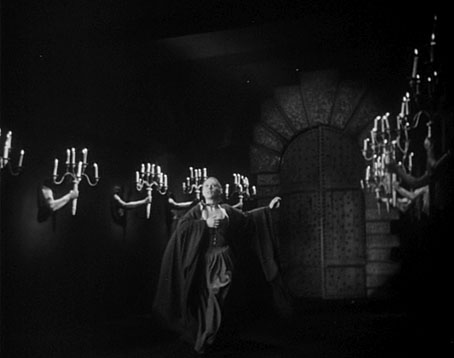
Fig. 2. Corridor still.
As Parkinson points out ‘With interiors that owe much to the paintings of Doré and Vermeer’ (Parkinson,
2013) the film owes much of its success to the work of Doré and Vermeer. The
interiors embody the magic as much as the beast does, from a long corridor
filled with magic hands holding candles to the wandering eyes of the statues
(see fig. 2.). It is possible that the Disney adaptation of Beauty and the
Beast was hugely inspired by Cocteau’s magical version, Lumière for example is
influenced by the corridor scene in Cocteau’s La Belle et la Bête, it’s possible Disney were inspired by the objects
coming to life in Beast’s castle as Vice mentions ‘And this magical adaptation of the much-filmed Jean-Marie Leprince de
Beaumont tale clearly inspired much of the imagery for the Disney version.’
(Vice, 2007).

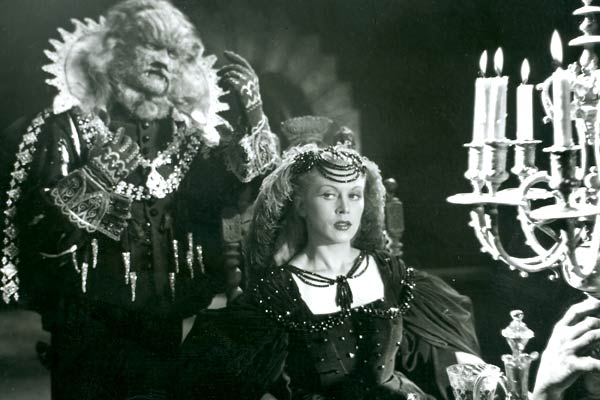
Fig. 3. Beast still.
There is a slight ideology that appearance overall
is the most sought after trait, this become apparent when Beast is continuously
pleasant and nice to Belle, giving her gifts and making sure she is served like
a queen, she however rejects his affection until the end of the film, when he
has transformed into a good looking young man. This also seems to ring true
when Beast says to Belle "You caress me as you would an animal," to
which she replies "But you are an animal,"
Overall this film is a magical take on an old
classic that has aged very well, with some beautiful scenes and whimsical
effects, it runs for 93 minutes and in that time not one piece of furniture
breaks into song. La Belle et la Bête can
still to this day provide an escape for reality.
Illustration List:
Cocteau, J. (1946). Figure 1. La Belle et la Bête poster. http://theredlist.com/media/database/settings/cinema/1940-1950/beauty-and-the-beast/039-beauty-and-the-beast-theredlist.jpeg
(Accessed on 02/11/14)
Cocteau, J. (1946). Figure 2. Corridor still. http://www.johncoulthart.com/feuilleton/wp-content/uploads/2011/02/hands2.jpg
(Accessed on 02/11/14)
Cocteau, J. (1946). Figure 3. Beast still. http://www.alalettre.com/pics/belle-et-bete.jpg
(Accessed on 02/11/14)
Bibliography:
Bradshaw, P. (2014). theguardian.com. http://www.theguardian.com/film/2014/jan/02/belle-et-bete-review
(Accessed on 02/11/14)
Parkinson, D. (2013). radiotimes.com. http://www.radiotimes.com/film/nbcjr/la-belle-et-la-bte
(Accessed on 02/11/14)
Vice, J. (2007). deseretnews.com. http://www.deseretnews.com/article/700004566/Belle-et-la-Bete-La-The-Beauty-and-the-Beast-1946.html
(Accessed on 02/11/14)